Login

Login
Dec. 08, 2025
Nylon conveyor rollers are widely used in modern material handling systems, from logistics and warehousing to food processing and light industrial automation. They are known for being lightweight, corrosion-resistant, and cost-effective—yet many buyers and engineers still hesitate when choosing them.
That hesitation usually comes down to a small set of practical questions. Below are the five questions people ask most often when evaluating nylon conveyor rollers, along with clear, experience-based answers.
One of the first concerns is load capacity. Nylon is a plastic, so buyers naturally wonder whether it can handle real industrial demands.
The answer depends on application and design.
High-quality nylon conveyor rollers are engineered to support light to medium loads with excellent consistency. When combined with proper wall thickness, reinforced shafts, and quality bearings, nylon rollers can perform reliably in many industrial environments such as:
Automated warehousing and sorting systems
Packaging and assembly lines
Airport baggage handling
Light manufacturing and distribution centers
However, nylon rollers are not intended to replace steel rollers in heavy-load or high-impact applications such as steel mills, mining, or bulk material handling. Selecting the correct roller diameter, shaft size, and bearing type is critical to ensuring sufficient load capacity.
This question usually arises when buyers are deciding between nylon and traditional metal rollers.
Nylon conveyor rollers offer several clear advantages:
Lower weight: Reduces energy consumption and allows conveyors to start and stop more easily
Corrosion resistance: Ideal for humid, wet, or chemically exposed environments
Low noise operation: Nylon absorbs vibration and significantly reduces conveyor noise
Surface protection: Less likely to scratch or damage transported goods
Lower inertia: Improves efficiency in gravity and accumulation conveyors
These advantages make nylon rollers particularly suitable for clean environments, high-speed systems, and applications where noise reduction is important.
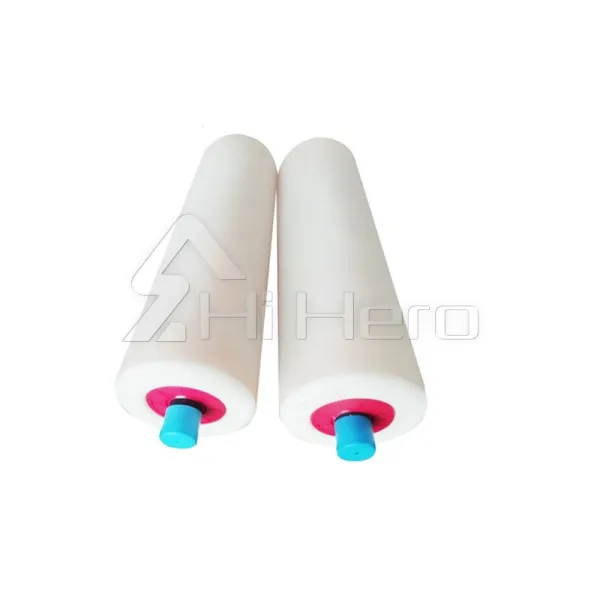
Nylon conveyor rollers perform best in environments where cleanliness, moisture resistance, and smooth operation matter more than extreme load capacity.
Typical applications include:
Food and beverage processing lines
Pharmaceutical and medical product handling
E-commerce fulfillment and automated sorting systems
Light-duty pallet and carton conveyors
Cold storage and refrigerated facilities
Because nylon does not rust and performs well in humid conditions, it is often preferred where steel rollers would require coatings or frequent replacement.
Durability is another common concern. Buyers want to know whether nylon rollers will deform, crack, or wear out quickly.
In practice, high-grade nylon rollers offer excellent wear resistance and long service life when used within their design parameters. Key factors that influence durability include:
Quality of the nylon material (virgin vs. recycled)
Bearing quality and sealing
Operating temperature range
Continuous load vs. intermittent use
Exposure to chemicals, UV, or abrasive materials
While nylon rollers may not survive extreme heat or heavy shock loads, they often outperform steel rollers in environments involving moisture, mild chemicals, or frequent washdowns.
At first glance, nylon conveyor rollers are usually less expensive than stainless steel rollers and comparable in price to coated steel rollers. But true cost-effectiveness is about total cost of ownership, not just purchase price.
Nylon rollers often reduce long-term costs by:
Lowering energy consumption due to reduced rolling resistance
Minimizing maintenance and lubrication requirements
Preventing corrosion-related failures
Reducing downtime caused by noise, vibration, or bearing contamination
For many conveyor systems, especially automated or clean-environment operations, nylon rollers deliver a strong return on investment over their service life.
Nylon conveyor rollers are not a one-size-fits-all solution, but they excel when used in the right applications. Understanding their strength limits, advantages over steel, durability characteristics, and long-term cost benefits helps buyers make confident, informed decisions.
When properly selected and manufactured, nylon conveyor rollers provide a reliable, efficient, and economical solution for modern conveyor systems—particularly in industries where cleanliness, corrosion resistance, and smooth operation are essential.
190 0 0
Join Us


Comments
All Comments ( 0 )