Login

Login
Feb. 18, 2025
Oxygen concentrators have become essential devices in both medical and industrial applications. Understanding the mechanics behind these devices is crucial, especially for those who may need them for health-related reasons or in industrial processes. So, how does an oxygen generator actually function?
The oxygen concentrator employs a specialized selective adsorption technology, which allows it to separate oxygen from nitrogen and other gaseous components found in compressed air, ultimately producing high-purity oxygen. This technology is integral to both medical treatments and various industrial processes, ensuring a consistent supply of pure oxygen.
If you are contemplating the purchase of an oxygen concentrator or simply wish to understand its workings better, this guide aims to provide a detailed overview.
An oxygen concentrator is a device designed to generate oxygen by employing air separation technology, essentially extracting oxygen from ambient air.
Based on their operation, oxygen generators can be categorized into several types: Pressure Swing Adsorption (PSA) oxygen generators, low-temperature oxygen generators, electrolyzed water oxygen generators, and oxygen-enriched membrane oxygen generators.
Additionally, they can be classified according to their application contexts into: industrial oxygen concentrators, home oxygen concentrators, and medical oxygen concentrators.
Industrial oxygen concentrators are vital components in producing concentrated oxygen across various commercial environments. They serve critical roles in medical facilities, where they supply oxygen for patient care, and across industries such as metallurgy, chemical manufacturing, waste treatment, and water management. These devices are necessary for enhancing combustion methods, driving chemical reactions, and managing waste effectively. Thus, the primary purpose of oxygen concentrators lies in bolstering efficiency, sustainability, and productivity across multiple operational sectors.
It’s essential to differentiate between an oxygen concentrator and an oxygen concentrator. The former is typically employed in medical settings or home care environments, drawing in room air, filtering out nitrogen, and issuing pure oxygen directly to patients. Its primary design is for personal use, ensuring a steady supply of oxygen for those with respiratory issues.
Conversely, oxygen concentrators function on a larger scale, primarily within industrial settings. While both devices utilize the same principle of extracting oxygen from nitrogen, the distinction lies in the production volume. Industrial oxygen concentrators are robust machines capable of yielding large quantities of concentrated oxygen commonly used in steel production, chemical processing, and wastewater management. These units are engineered for a greater output and durability to meet demanding oxygen requirements.
The predominant composition of air includes nitrogen (approximately 78%) and oxygen (around 21%), alongside trace amounts of other gases. The fundamental principle of an oxygen generator focuses on differentiating the molecular sizes and weights of nitrogen and oxygen to yield purer oxygen. Typically, this process achieves a purity level exceeding 90%. This article will outline the operational principles of the PSA oxygen concentrator.
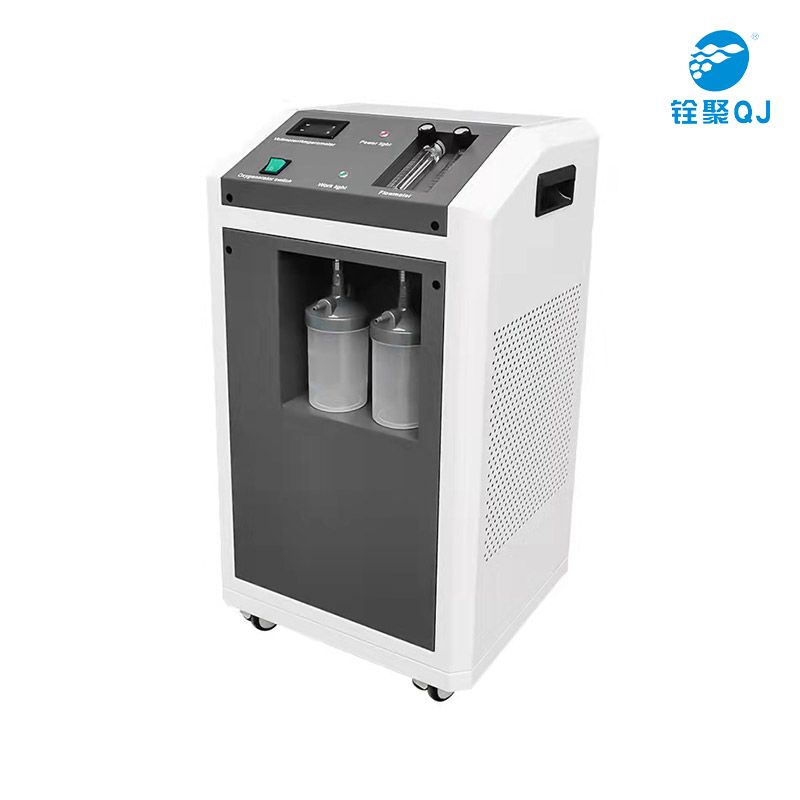
The PSA oxygen generators (recognized as pressure swing adsorption units) facilitate the extraction of oxygen with a purity level typically around 93% ± 2. Under normal temperature and pressure conditions, these generators utilize specialized molecular sieves that selectively capture impurities such as nitrogen, carbon dioxide, and moisture from the distilled air. This process features two molecular sieve adsorption towers. Once filtered and dehumidified air is induced into one tower, the nitrogen and other impurities are captured by the sieve, enriching the air's oxygen content, which is subsequently expelled and channeled to an oxygen buffer tank. The other tower undergoes a rapid depressurization post-adsorption, releasing the accumulated trapped components. This alternating process ensures the continuous production of cost-effective oxygen with the desired purity.
This type of oxygen generator produces oxygen by utilizing a cryogenic distillation approach. Initially, the air is cooled to below 100 K to achieve liquefaction. The differing boiling points of oxygen and nitrogen (90 K for oxygen and 77 K for nitrogen) enable nitrogen to vaporize more easily. In the distillation tower, vapor and liquid undergo continual interaction, allowing for the gradual release of nitrogen while concentrating oxygen in the resultant liquid. This yields high-purity oxygen through complete separation.
This generator functions by splitting water into hydrogen and oxygen during the electrolysis process. An electrical power source initiates the reaction within the electrolyzer, resulting in the generation of hydrogen and oxygen. The hydrogen byproduct is released via drainage, while the oxygen is delivered to the required location through a designated supply line.
Using specialized membrane technology designed for the separation of gases, this generator actively extracts oxygen from the ambient air to facilitate oxygen production. The membrane's unique composition permits the selective passage of oxygen while obstructing the flow of other gases.
With various types of oxygen concentrators available, each operating under different principles, users should make their selections based on aspects like oxygen purity, flow rate, and intended applications. Should you need assistance in making your choice, feel free to reach out to us!
This method of oxygen production leverages chemical reactions to generate oxygen. For instance, heating potassium chlorate (KClO3) yields oxygen. Although capable of producing high-purity oxygen, this technique is generally unsuitable for large-scale production given its inherent safety risks and associated costs.
Familiarity with the parts of an oxygen concentrator is crucial for understanding its operation. Here’s a breakdown of the key elements that constitute an oxygen concentrator:
The air compressor plays a vital role by compressing the ambient air and supplying it under pressure to subsequent processes within the oxygen concentrator. This step is integral to the efficient separation of oxygen from other atmospheric gases.
Following compression, the air progresses to the pre-treatment or filtration stage where it undergoes cleansing and drying. This is typically achieved using a system of filters and air dryers that eliminate dust, oil, moisture, and other particulates before the compressed air enters the separation module. This preventive measure is crucial for safeguarding the sieve beds during the separation phase.
The separation module can include various types of units such as PSA modules, membrane separators, or cryogenic setups, serving as the core component of the oxygen generator. This element is responsible for the isolation of oxygen based on the particular separation approach utilized by the specific generator.
In PSA systems, the separation unit is characterized by a sieve bed packed with zeolite materials, which work with a series of valves to control pressure fluctuations. Membrane separators employ semi-permeable membranes for differentiating between nitrogen and oxygen, while cryogenic systems involve a sequence of thermal management tools and distillation approaches to liquefy and separate air's components.
Compression: Initially, air is actively drawn into the PSA oxygen generator where it is compressed. Although pressure increases, the mixture still largely comprises nitrogen along with smaller quantities of oxygen.
Adsorption: The compressed air subsequently enters the molecular sieve adsorption tower, which operates under high pressure. The sieve selectively retains oxygen from the air while allowing nitrogen to escape.
Decompression: Once the molecular sieve has absorbed sufficient oxygen, gas supply to the tower halts, prompting decompression. This results in desorbing the captured oxygen, leading to the formation of high-purity oxygen.
Recovery: The liberated oxygen flows into a gas storage tank via a recovery pipeline, becoming available as a product while the molecular sieve tower reduces pressure to near atmospheric levels.
Regeneration: The regeneration phase entails restoring the molecular sieve tower's pressure close to atmospheric levels, thus expelling any residual nitrogen and rejuvenating the sieve for the next cycle. During this phase, the sieve is prepared to capture fresh oxygen from the new intake of air.
This cycle enables continuous oxygen production while improving efficiency and reducing costs, facilitating users in selecting the right oxygen concentrator suitable for their needs.
321 0 0
Join Us


Comments
All Comments ( 0 )